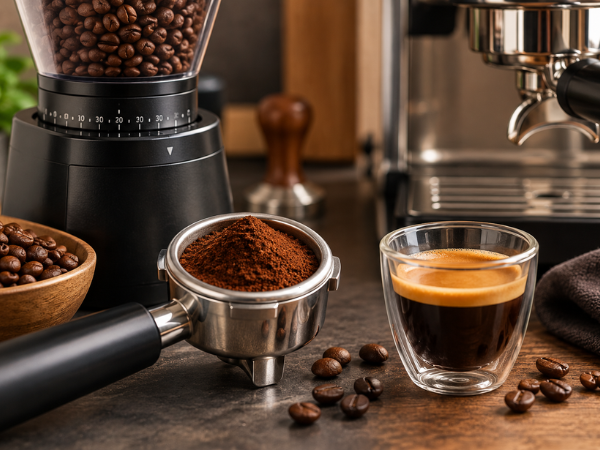
Espresso usually needs a fine, consistent coffee grind, but there is no single setting that works for every coffee, grinder, or espresso machine. The right grind is the one that allows water to pass through the coffee at a controlled rate and produces a balanced shot.
Why Does Espresso Need a Fine Grind?
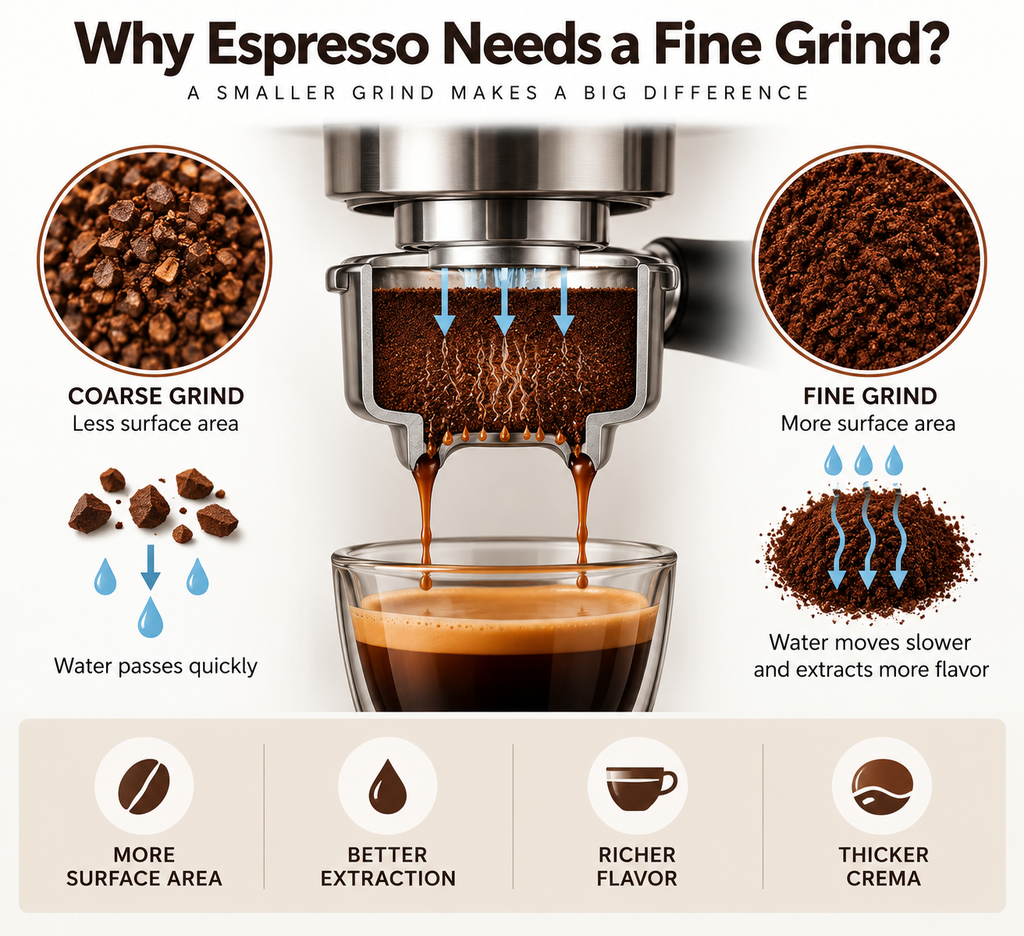
Espresso is brewed differently from drip coffee and other common brewing methods. Hot water is pushed through a relatively small bed of finely ground coffee under pressure, so the coffee needs enough surface area for extraction to happen quickly.
A fine grind creates more surface area than a coarse grind. This gives water more contact with the coffee particles as it passes through the puck.
The goal, however, is not simply to grind as fine as possible. If the particles are excessively fine, water can struggle to move through the coffee evenly. The result may be a slow shot with harsh or bitter flavors.
The ideal grind provides a balance between:
- Water flow
- Extraction speed
- Flavor development
- Evenness of extraction
- Shot consistency
That is why espresso grinders usually offer much more precise adjustment than grinders intended primarily for drip coffee.
Espresso Grind Size and Extraction
Grind size has a direct effect on how quickly water moves through the coffee and how much flavor is extracted along the way.
When coffee is ground finer, the increased surface area generally slows water flow and increases the opportunity for extraction. When coffee is ground coarser, water can move through the puck more easily.
This creates an important relationship:
Finer grind → slower flow → potentially more extraction
Coarser grind → faster flow → potentially less extraction
But grind size is only one part of the equation. Dose, coffee freshness, water temperature, pressure, puck preparation, and the espresso machine itself can also influence the final result.
Recommended Tools for Consistent Espresso Extraction
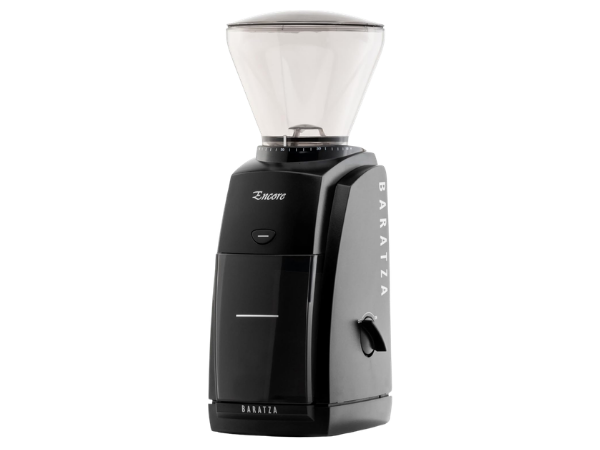
Baratza Encore
| Grinder Type | Conical Burr Grinder |
|---|---|
| Burr Material | Steel |
| Burr Size | 40 mm |
| Grind Settings | 40 |
| Material | Plastic |
| Style | Automatic |
| Item Weight | 5.6 pounds |
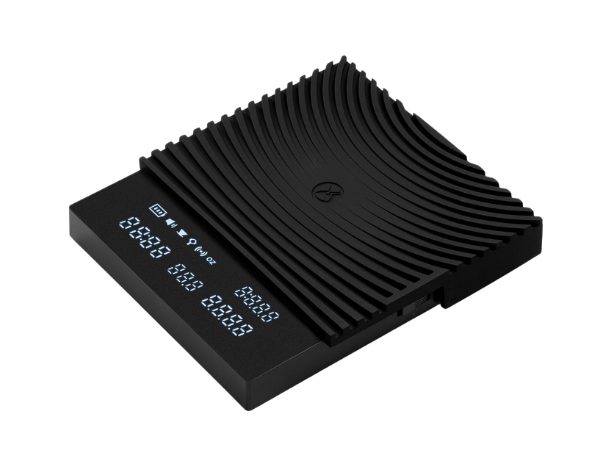
TIMEMORE Basic 3.0
| Recommended Use | Coffee |
|---|---|
| Special Features | Smart, Timer |
| Weight Limit | 2000 g |
| Precision | 0.1 g |
| Starting Weight | 0.2 g |
| Brewing Modes | Espresso, Pour Over & Regular |
| Design | Ultra-slim, 20 mm |
Too Fine vs. Too Coarse Espresso Grind
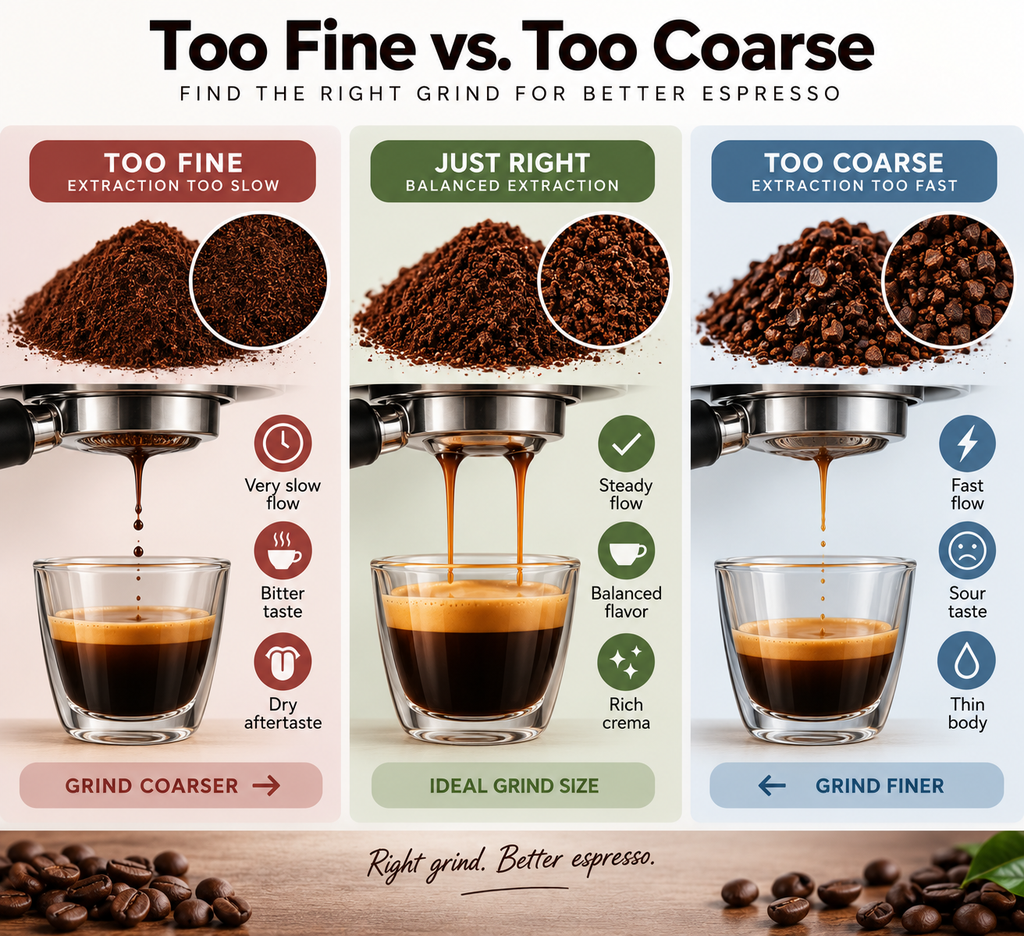
Espresso grind size is a delicate balance between resistance and flow. When the grind is too fine, water struggles to pass through the puck, leading to over‑extraction, bitterness, and sometimes clogging of the machine.
- Too Fine Grind – Produces excessive resistance, slow flow, and bitter flavors.
- Too Coarse Grind – Causes fast flow, sour taste, and thin body.
- Channeling Issues – Incorrect grind leads to uneven water paths.
- Machine Stress – Overly fine grinds can strain the pump.
- Flavor Imbalance – Both extremes distort sweetness, acidity, and bitterness.
The ideal grind sits between these two extremes, allowing water to flow steadily while extracting full flavor. A balanced grind produces a shot with rich crema, pleasant acidity, and smooth sweetness.
Adjusting Grind Size on Your Coffee Grinder
Espresso requires relatively precise grind adjustments, so the grinder you use can make dialing in much easier.
Start with the grinder manufacturer’s recommended espresso range if one is provided. Then make small changes rather than moving several settings at once.
A useful approach is:
- Set the grinder to a fine espresso range.
- Prepare the same dose of coffee for each test.
- Pull a shot using the same basic preparation.
- Observe the flow and taste the espresso.
- Make a small grind adjustment.
- Pull another shot and compare the results.
If the shot runs too quickly, move toward a finer setting. If it runs too slowly, move toward a coarser setting.
Stepped vs. Stepless Grinders
Some grinders use numbered steps, while others allow continuous adjustment.
A stepped grinder is easier to understand because each setting is clearly defined. However, the distance between settings may sometimes make very small espresso adjustments difficult.
A stepless grinder allows more precise changes and can be particularly useful when you are trying to fine-tune espresso extraction.
For regular espresso preparation, a grinder with quality burrs and precise adjustment is generally more useful than simply choosing a grinder with a large number of settings.
How to Dial In Your Espresso Grind
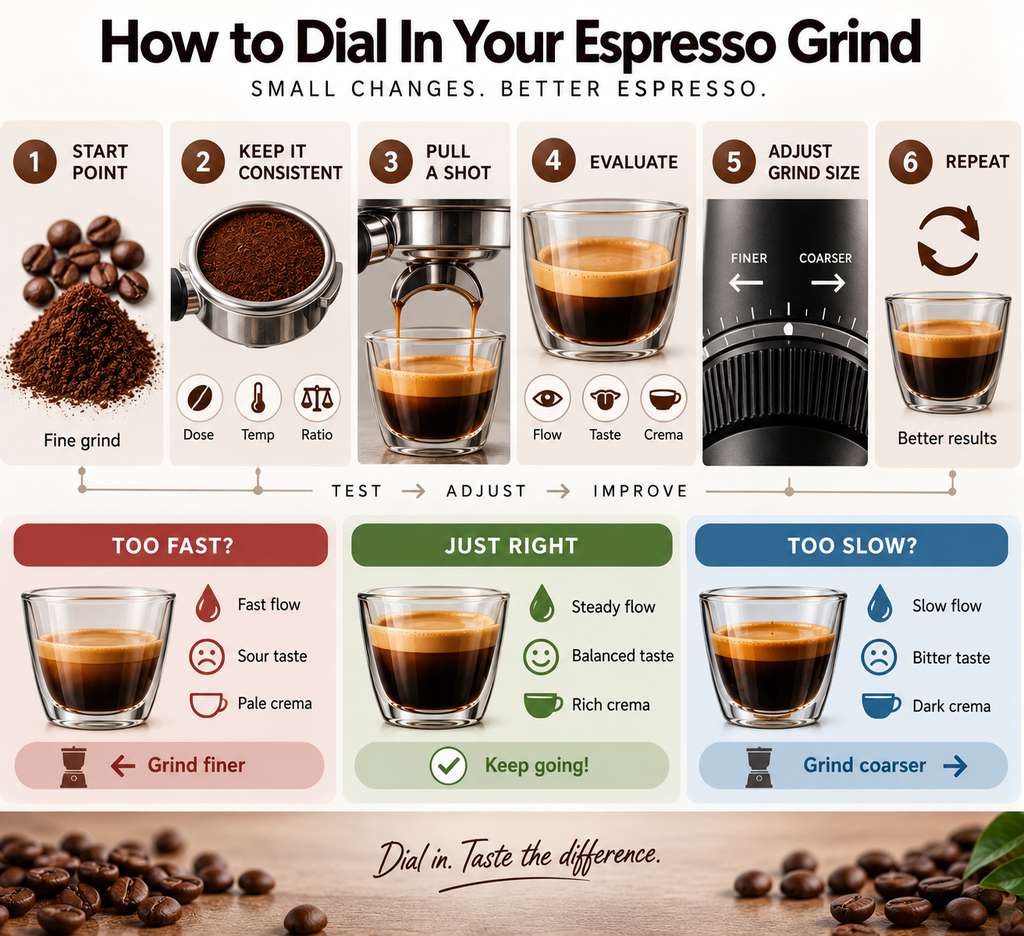
Dialing in your espresso grind is the process of fine‑tuning grind size, dose, and tamp pressure to achieve a balanced shot. It’s not a one‑time adjustment but an ongoing practice, since beans, humidity, and grinder performance all change over time.
- Measure Dose – Start with a consistent coffee weight, usually 18–20 grams for a double shot.
- Adjust Grind – Make small changes; even a slight shift alters extraction time.
- Tamp Pressure – Apply firm, even pressure to avoid channeling.
- Shot Timing – Aim for 25–30 seconds; shorter means under‑extraction, longer means over‑extraction.
- Taste Testing – Flavor is the ultimate guide; adjust until sweetness, acidity, and bitterness are balanced.
Dialing in is iterative. Pull a shot, taste it, and adjust one variable at a time. If it’s sour, grind finer; if it’s bitter, grind coarser. Keep notes on dose, grind setting, and shot time to track progress.
Espresso Grind Size Chart
The following chart provides a practical starting point rather than a universal rule. Grinder settings are not standardized, so a “fine” setting on one grinder may be different from a “fine” setting on another.
| Grind | Water Flow | Possible Result | Adjustment |
|---|---|---|---|
| Very fine | Very slow | Bitter, harsh, dry | Grind coarser |
| Fine | Controlled | Balanced, rich espresso | Good starting point |
| Medium-fine | Faster | Potentially weak or sour | Grind finer |
| Too coarse | Very fast | Thin, sour, under-extracted | Grind finer |
For espresso, fine and consistent is the most useful starting description. The exact grinder number matters less than how the coffee behaves during extraction.
Common Espresso Grinding Mistakes
Grinding coffee for espresso is one of the most sensitive steps in the brewing process, and even small errors can drastically affect the taste of your shot. Many beginners assume that once they set their grinder, they can forget about it, but espresso demands constant attention to detail.
- Inconsistent Grind – Uneven particle sizes lead to uneven extraction, with some grounds over‑extracted and others under‑extracted.
- Wrong Grinder – Blade grinders chop beans irregularly, making them unsuitable for espresso. Burr grinders are essential.
- Skipping Adjustments – Different beans and roast levels require grind changes; ignoring this leads to poor flavor.
- Dirty Grinder – Old grounds and oils build up, causing rancid flavors and inconsistent performance.
- Ignoring Shot Time – Shot timing reveals grind accuracy; neglecting it means missing critical feedback.
Avoiding these mistakes requires discipline and awareness. Always clean your grinder, monitor shot times, and adjust grind size when switching beans.