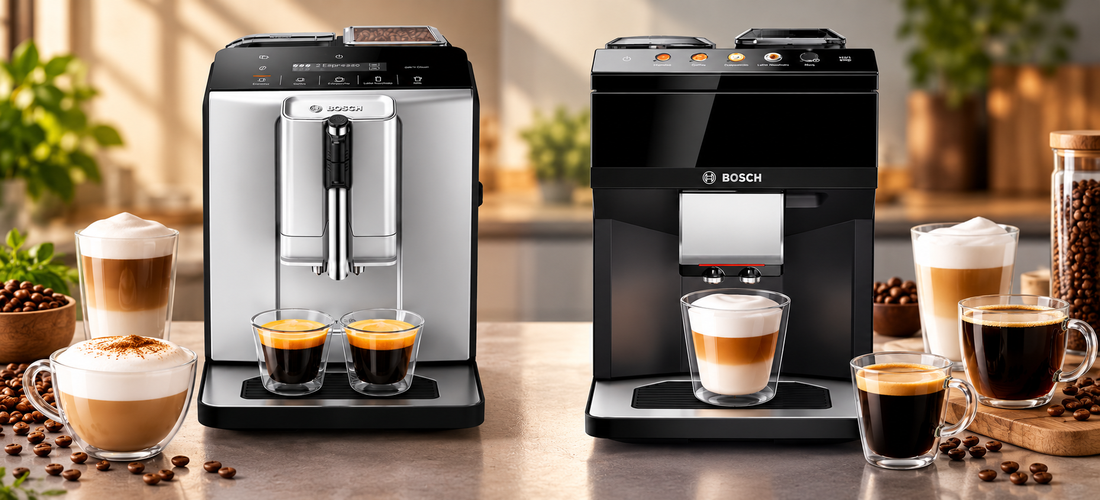
The Bosch 300 and 500 Series VeroCafe are fully automatic espresso machines that grind beans and brew coffee at the touch of a button. The main differences are drink selection, milk preparation, customization, and water tank capacity.
Bosch 300 vs 500: Key Differences at a Glance
Both machines offer convenient bean-to-cup brewing, but the 500 Series provides more drink options and more control over coffee strength.
| Feature | Bosch 300 Series | Bosch 500 Series |
|---|---|---|
| Beverage options | 5 | 9 |
| Coffee strength levels | 3 | 5 |
| Water tank capacity | 45 oz | 64 oz |
| Grinder | Ceramic | Ceramic |
| Milk system | Milk Express | Integrated system with flexible hose |
| Display | Touch controls | 2.5-inch color display |
| Two-cup preparation | One- or two-cup settings | Dedicated DoubleCup feature |
The 500 Series has the advantage in versatility, reservoir size, and customization. The 300 Series keeps things simpler, making it worth considering if you mainly drink espresso and regular coffee.
Coffee Drinks Compared: What Can Each Bosch Machine Make?
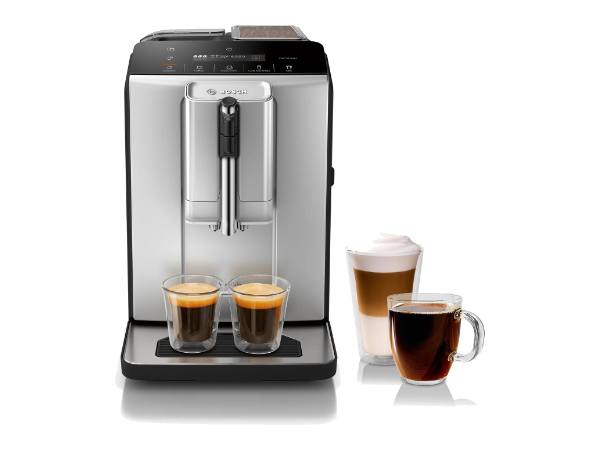
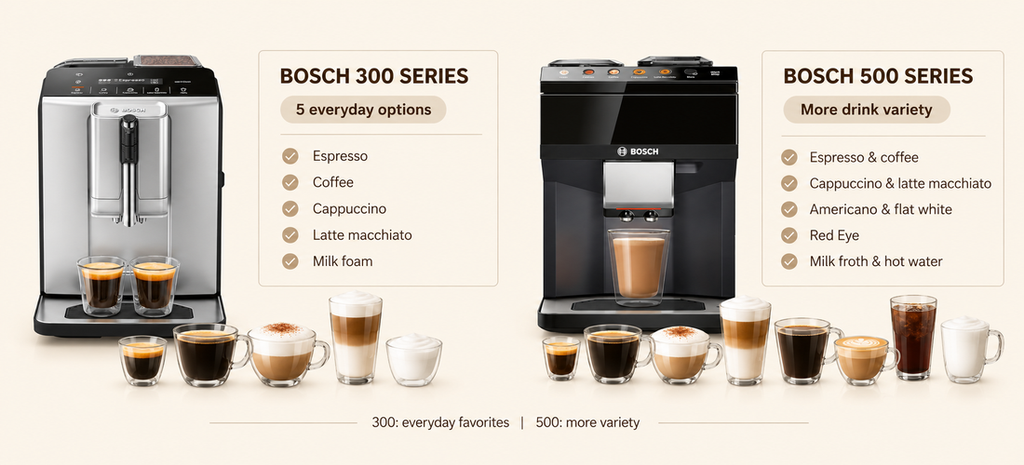
The number of available drinks is one of the clearest differences between these machines. The Bosch 300 covers everyday favorites, while the 500 offers a wider selection for people who enjoy different coffee styles.
Bosch 300 Series drinks:
- Espresso
- Coffee
- Cappuccino
- Latte macchiato
- Milk foam
Bosch 500 Series drinks and options:
- Espresso and regular coffee
- Cappuccino and latte macchiato
- Americano and flat white
- Red Eye
- Milk froth and hot water
The 300 Series covers the essentials for everyday coffee, while the 500 Series offers more variety for people who like to switch between black coffee and milk-based drinks.
Milk Frothing Compared: In-Cup Frother vs. Milk Hose
Milk preparation is one of the main differences between the Bosch 300 and 500 Series. The Bosch 300 uses an in-cup frothing system, while the 500 draws milk through a flexible hose and offers automatic steam cleaning.
Bosch 300 Series — Milk Express
The Milk Express system froths milk directly in your cup. Add milk, position the frother, and select your preferred drink. This setup is simple to use but requires manual handling and cleaning after preparation.
Bosch 500 Series — Flexible Milk Hose
The Bosch 500 draws milk through a flexible hose placed in a milk carton or separate container. Its AutoMilk Clean function uses steam to clean the milk system after milk-based drinks, making daily maintenance more convenient.
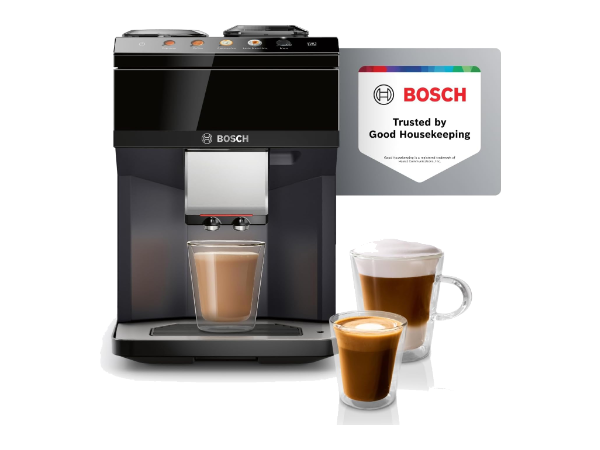
Water Tank and Bean Hopper Capacity: How Often Will You Refill?
The Bosch 300 has a 45-ounce water tank, while the 500 has a larger 64-ounce reservoir. The 500 can hold 19 ounces more water, which means fewer refills when preparing several drinks throughout the day.
| Capacity | Bosch 300 | Bosch 500 |
|---|---|---|
| Water tank | 45 oz | 64 oz |
| Bean hopper | Approx. 9 oz | 9.5 oz |
The bean hopper sizes are similar, so the water reservoir is the more meaningful capacity difference. Choose the 300 for lighter household use or the 500 if multiple people regularly make coffee.
Coffee Strength and Grinder Adjustments
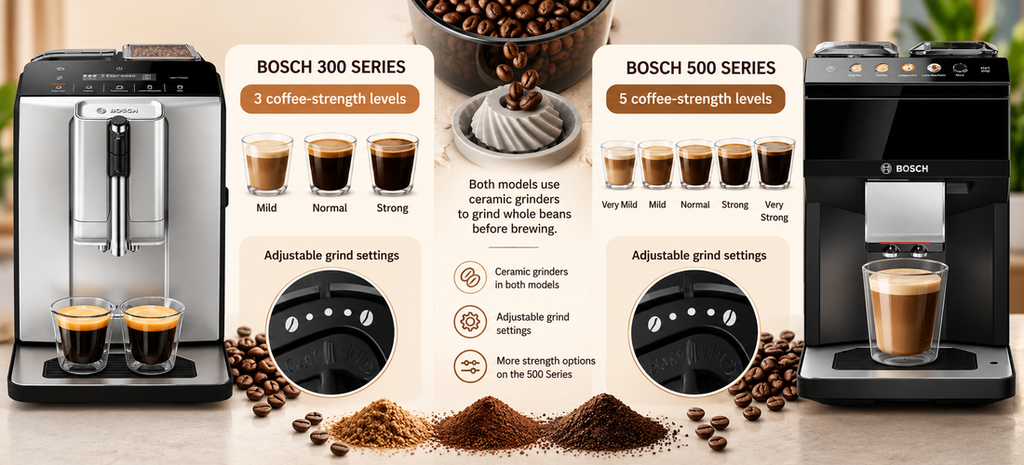
Both Bosch machines use ceramic grinders to grind whole beans before brewing. The main difference is the number of coffee-strength levels, giving the 500 Series more control over the final cup.
Key differences:
- Bosch 300: Three coffee-strength levels.
- Bosch 500: Five coffee-strength levels.
- Both models: Adjustable grind settings for different coffee preferences.
The Bosch 500 offers more flexibility when adjusting coffee intensity, but extra settings do not guarantee better flavor. Bean freshness, grind size, and drink volume also affect the final result.
Brewing Two Coffees at Once and Other Time-Saving Features
Both machines automate grinding and brewing, making it easier to prepare coffee without handling beans separately. The Bosch 300 offers one- and two-cup settings, while the 500 includes the DoubleCup function for added convenience.
Key features:
- Bosch 300: Automatic grinding and brewing.
- Bosch 500: DoubleCup function for preparing two servings.
- Bosch 500: Color display and a wider drink selection.
- Both models: Convenient touch controls and automatic coffee preparation.
The Bosch 500 is better suited to households with different coffee preferences, especially when preparing drinks for two people.
Cleaning and Maintenance: Which Bosch Machine Is Easier to Manage?
Both machines have a removable brewing unit that can be rinsed under running water. Each also uses Bosch’s Calc’n Clean program for cleaning and descaling.
The main difference is milk-system maintenance:
- Bosch 300: Clean the in-cup milk frother after use.
- Bosch 500: AutoMilk Clean uses steam after milk-based drinks to help reduce milk residue.
- Both models: Empty the drip tray and grounds container, rinse the brewing unit, and descale regularly.
The 500 automates more of the milk-system cleaning, but neither machine is maintenance-free. Regular cleaning is important for keeping coffee flavors consistent and preventing residue buildup.
Bosch 300 vs 500: Is the Price Difference Worth It?
The Bosch 500 offers more features, but whether it is worth the extra cost depends on your coffee habits. If you mainly drink espresso and regular coffee, the Bosch 300 may be sufficient.
Choose the Bosch 300 if you:
- Mainly drink espresso and regular coffee.
- Prefer simple touch controls.
- Make milk-based drinks occasionally.
- Want automatic brewing without a large selection of programs.
Choose the Bosch 500 if you:
- Want more coffee recipes and five strength levels.
- Frequently prepare cappuccinos, flat whites, or lattes.
- Prefer a larger water tank.
- Value automatic milk-system cleaning and one-touch DoubleCup preparation.
Verdict: The Bosch 300 is sufficient for straightforward daily coffee, while the Bosch 500 is better suited to households that want more drink variety and convenience.